
President at Private Club Group
A Lifestyle Guide from The Private Club Report
In private club communities throughout the United States, real estate performance and membership vitality are directly connected. While homes provide the physical entry point, the decision to purchase is rarely based on architecture alone. In many golf, country club, and lifestyle communities—particularly those with waitlists or bundled membership structures—the club experience itself becomes the determining factor in a buyer’s decision.
Prospective residents are not simply purchasing property. They are evaluating lifestyle, culture, governance, service standards, and long-term community stability.
For boards, general managers, developers, and real estate professionals operating within private club environments, understanding this connection is essential. The club experience is not an ancillary amenity—it is a core economic driver influencing property values, absorption rates, and sustained demand.
The Arrival Sequence: Where Perception and Value Begin
In hospitality science, the “arrival sequence” significantly shapes guest perception. In private club communities, that sequence begins at the gatehouse.
The professionalism of the security team, their presentation, tone, and efficiency immediately communicate standards. A composed and welcoming interaction suggests operational discipline and stability. Conversely, inconsistency introduces doubt. Within seconds, prospective buyers begin forming conclusions about the overall environment.
From there, the drive through the community reinforces or challenges those initial impressions. Landscaping quality, road conditions, signage, architectural harmony, and overall upkeep serve as visible indicators of stewardship. Buyers are assessing whether the community protects value and maintains long-term standards.
Although homeowners associations and clubs often operate as separate entities, buyers experience them as a single ecosystem. Alignment between the club and the HOA—visually, operationally, and strategically—strengthens buyer confidence and enhances real estate positioning.
The drive through a private club community is not incidental. It is part of the valuation process.
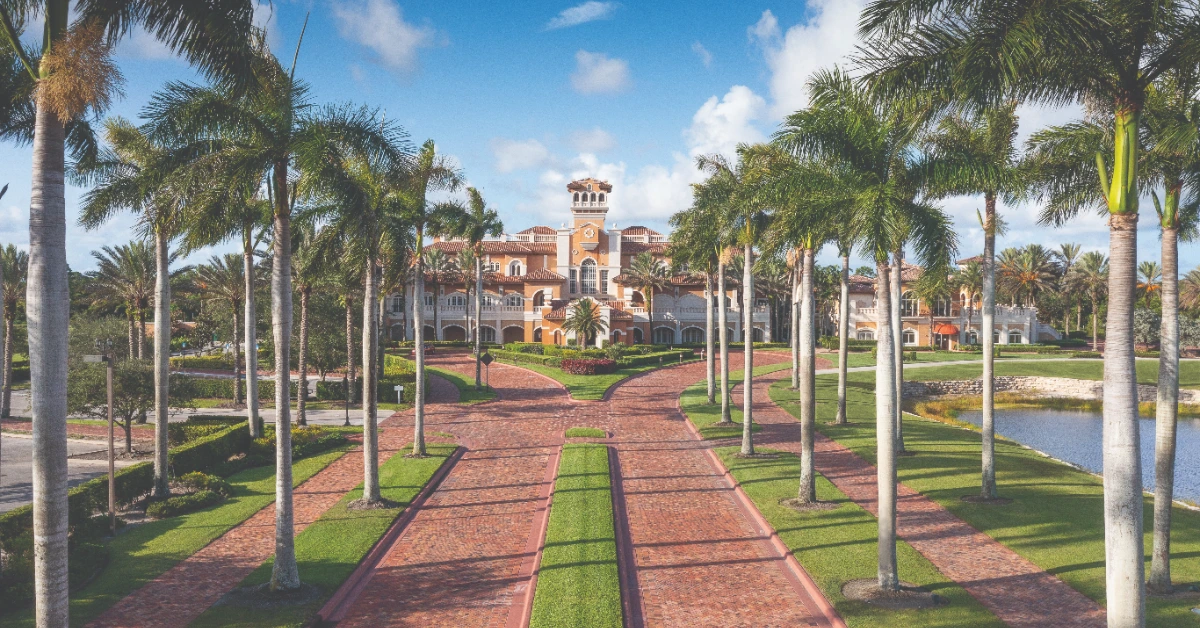
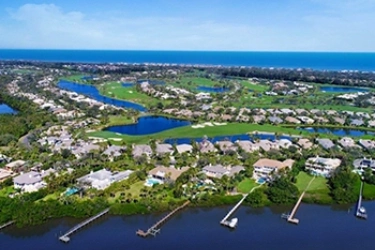
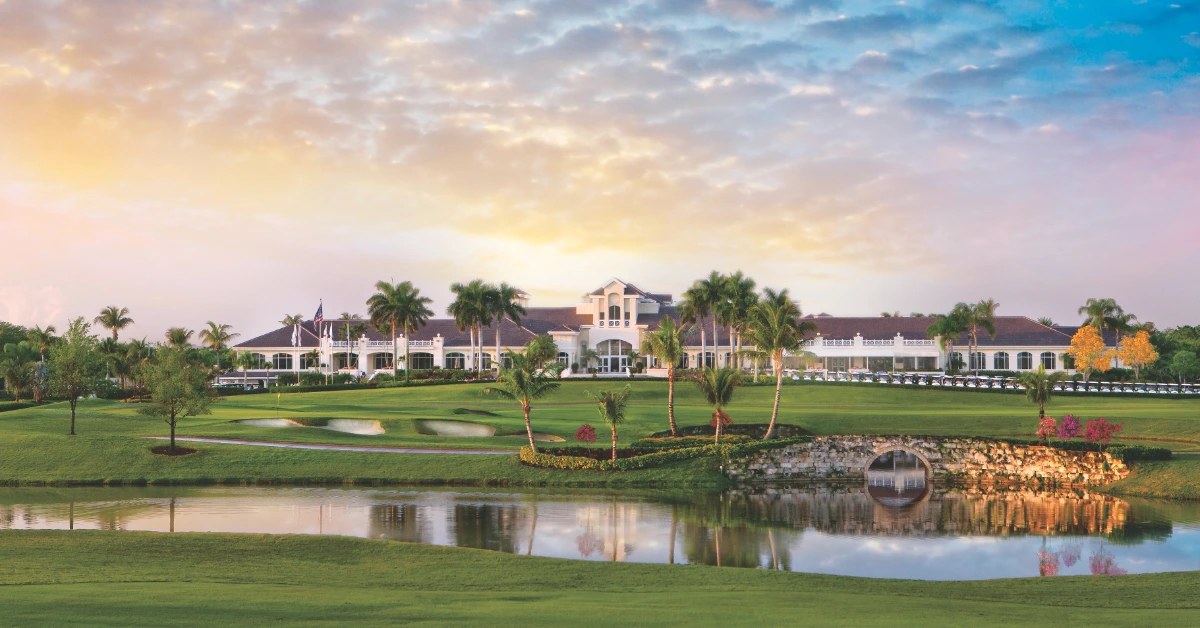
Tesoro Club in Port St. Lucie, Florida
The Clubhouse as a Conversion Environment
Arrival at the clubhouse represents a pivotal emotional moment. It is often where interest deepens—or dissipates.
The portico, valet presentation, and greeting sequence collectively frame the perception of exclusivity and care. The hospitality industry provides a clear example through The Ritz-Carlton, whose “Three Steps of Service”—a warm greeting using the guest’s name, anticipation of needs, and a sincere farewell—demonstrate how disciplined service standards elevate experience without requiring significant capital investment.
For private clubs, similar service discipline creates a measurable impact. Cleanliness, order, scent, lighting, and staff attentiveness influence how prospective members interpret operational competence. Environmental cues subtly communicate whether leadership maintains standards consistently.
Buyers rarely verbalize these evaluations. Instead, they internalize them through a simple lens: Is this community well managed? Will it feel this way five or ten years from now?
In club environments where real estate sales drive membership growth, these impressions directly affect conversion rates.
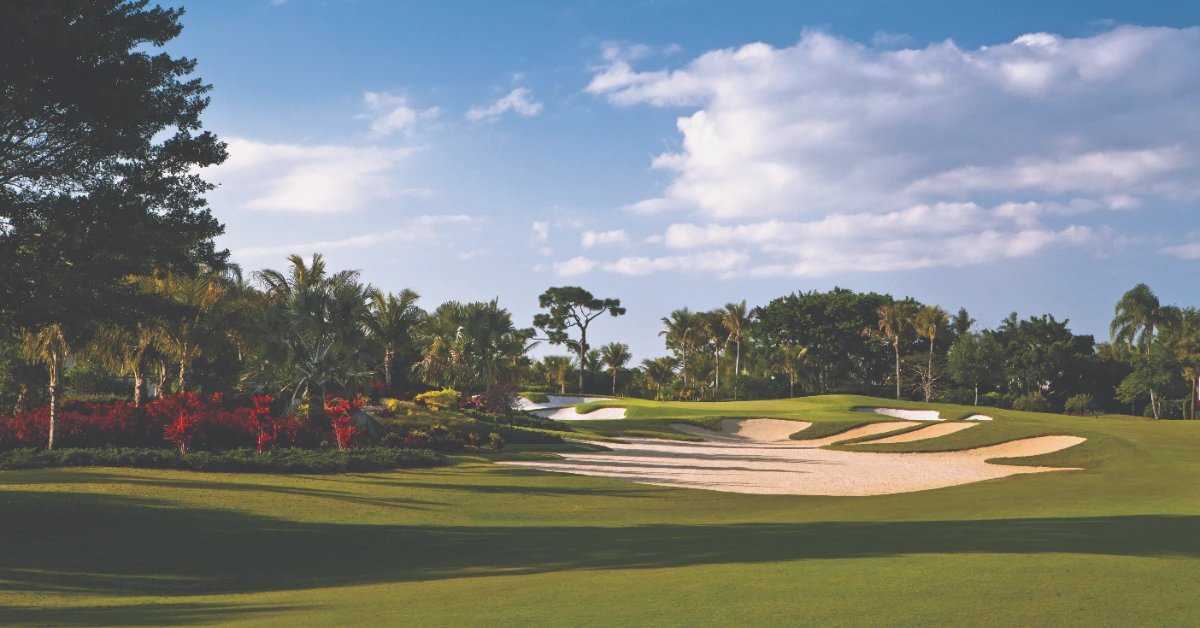
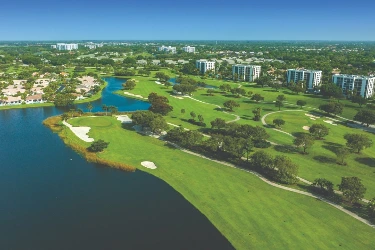
BallenIsles Country Club in Palm Beach Gardens, Florida
Culture as a Long-Term Asset
While amenities such as championship golf courses, dining venues, wellness centers, and racquet facilities remain important, they are not typically decisive on their own. Homes can be renovated. Interiors can be redesigned. Physical infrastructure can be improved.
Culture cannot be easily altered.
Prospective members observe how staff interact with members, how members engage with one another, and whether the atmosphere feels inclusive and energetic. They are evaluating whether the club will serve as a long-term social anchor for their family.
Research in luxury hospitality consistently demonstrates that personalized recognition and service consistency are strong predictors of satisfaction and loyalty. In private clubs—where membership spans decades—those early impressions carry extended financial implications.
A vibrant, aligned culture increases referrals, strengthens retention, and supports pricing stability in both initiation fees and real estate values.
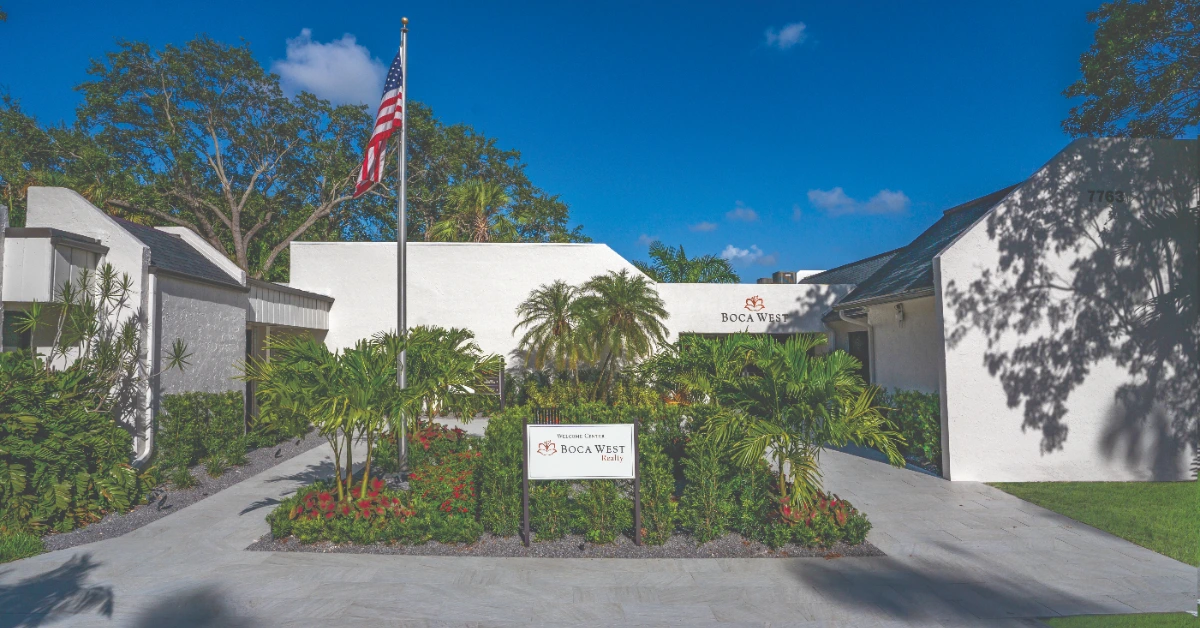
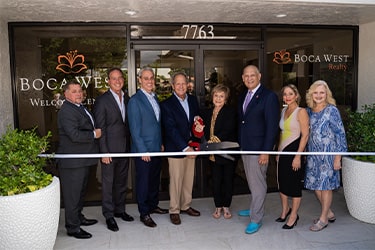
Boca West Realty New Sales Office in Boca Raton, Florida
Operational Excellence and Real Estate Economics
In communities where membership is tied to home ownership, real estate sales represent new member acquisition. Each transaction potentially produces initiation revenue, replaces inactive members with engaged participants, and injects renewed vitality into programming and social life.
Operational consistency across touchpoints—gatehouse, community presentation, clubhouse arrival, dining experience, and digital presence—creates alignment that strengthens market perception.
When alignment exists, members naturally become ambassadors. Realtors gain confidence in presenting the club experience. Prospective buyers sense authenticity rather than marketing.
The club experience, therefore, functions as a strategic economic asset rather than a discretionary amenity.
The Digital Front Gate: Online Presence as First Impression
Increasingly, the first interaction with a private club community occurs online. A club website serves as the digital gatehouse, shaping perception before a visit is ever scheduled.
Photography quality, navigation, storytelling clarity, and mobile responsiveness influence whether prospective buyers explore further or disengage. In competitive luxury markets, digital presentation has become integral to real estate positioning and membership demand.
An aligned digital presence reinforces the in-person experience. A disconnected or outdated one diminishes momentum before the sales process begins.
Selecting the Right Club Community
For prospective members evaluating private club communities, careful observation is essential. Consider the arrival sequence, service standards, governance transparency, and cultural tone. Assess whether operational discipline appears consistent across departments. Observe how members interact and how leadership communicates vision.
Ultimately, the long-term decision is not about walls, flooring, or landscaping details. It is about belonging within a community whose standards, culture, and service philosophy align with personal expectations.
The most successful private club communities understand that first impressions are cumulative and strategic. From website to gatehouse to clubhouse, every touchpoint contributes to the broader narrative of quality and stewardship.
Real estate demand in private club environments is not driven solely by inventory. It is driven by experience.
About The Private Club Report
This analysis is part of the ongoing industry insights published by The Private Club Report, the digital publication platform of Private Club Group. The publication explores governance, operations, hospitality strategy, AI visibility, and the evolving relationship between private club experience and community real estate performance.
For additional research, industry commentary, and thought leadership on private club management and community economics, visit the online publication at PrivateClubGroup.com.